TED-Style Storytelling: Master the Narrative Techniques Used in the World's Best Talks
Learn the storytelling frameworks, narrative structures, and emotional techniques that make TED talks compelling, memorable, and transformative.
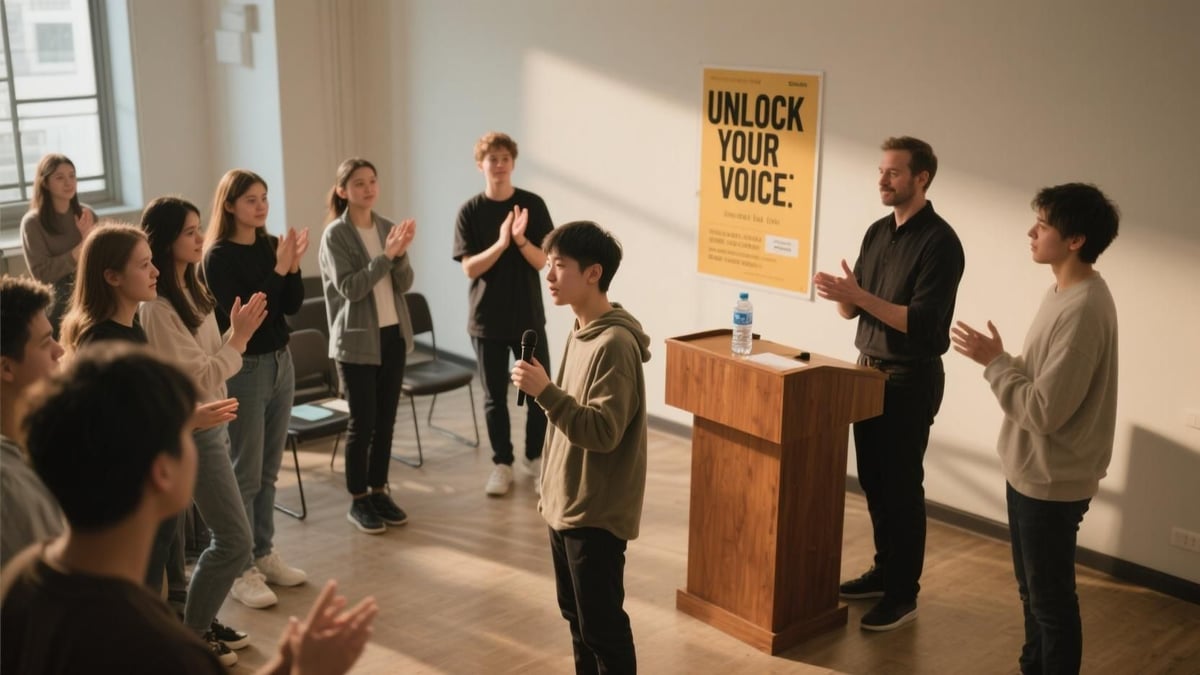
TED-Style Storytelling: Master the Narrative Techniques Used in the World's Best Talks
TED talks are masterclasses in storytelling. This guide reveals the narrative frameworks, emotional techniques, and structural patterns that make TED presentations unforgettable.
The TED Storytelling Philosophy
Core Principles
Idea-Centric:
- Story serves the idea
- Every element supports message
- Clarity over complexity
- Impact over entertainment
Authentically Personal:
- Real experiences
- Genuine emotion
- Vulnerable moments
- Relatable struggles
Universally Relevant:
- Connects to audience
- Transcends specifics
- Applicable insights
- Shared humanity
Story Structure Frameworks
The Classic TED Arc
Act 1: Setup (Minutes 0-3)
Hook:
• Grab attention immediately
• Create curiosity
• Establish relevance

Context:
• Set the scene
• Introduce yourself
• Frame the problem

Personal Connection:
• Why this matters to you
• Your relationship to topic
• Authentic motivation
Act 2: Journey (Minutes 3-14)
Challenge:
• The obstacle faced
• Failed attempts
• Moment of crisis

Discovery:
• The breakthrough
• New understanding
• Paradigm shift

Evidence:
• Research and data
• Examples and cases
• Proof points

Implications:
• What it means
• Why it matters
• Broader impact
Act 3: Resolution (Minutes 14-18)
Synthesis:
• Connect the dots
• Reveal the pattern
• Share the insight

Application:
• What audience can do
• Practical steps
• Transformative potential

Vision:
• Future possibilities
• Inspiring call
• Memorable close
The Transformation Story
Framework:
Before State:
"I used to believe/do/think..."

Catalyst:
"Then something happened..."

Journey:
"I discovered/learned/realized..."

After State:
"Now I understand/do/believe..."

Universal Truth:
"And you can too..."
Example: Brené Brown
Before: "I'm a researcher, I don't do vulnerability"
Catalyst: "My research showed vulnerability is essential"
Journey: "I had a breakdown, then a breakthrough"
After: "I embraced vulnerability and transformed"
Universal: "Vulnerability is the birthplace of innovation"
The Discovery Story
Framework:
Question:
"I wanted to understand..."

Investigation:
"So I studied/tested/explored..."

Surprise:
"What I found shocked me..."

Insight:
"It revealed that..."

Implication:
"This changes everything because..."
Example: Amy Cuddy
Question: "Can body language change how we feel?"
Investigation: "We tested power poses in the lab"
Surprise: "Hormones changed in just 2 minutes"
Insight: "Your body can change your mind"
Implication: "You can fake it till you become it"
Emotional Storytelling Techniques
Vulnerability and Authenticity
The Power of Personal Struggle:
Brené Brown:
"I had a breakdown. I called it a spiritual awakening.
My therapist called it a breakdown."

Why it works:
• Humanizes the speaker
• Creates connection
• Shows courage
• Builds trust
Sharing Failure:
J.K. Rowling:
"I had failed on an epic scale. An exceptionally short-lived
marriage had imploded, and I was jobless, a lone parent, and
as poor as it is possible to be in modern Britain."

Why it works:
• Relatable struggle
• Authentic emotion
• Sets up transformation
• Inspires hope
Creating Emotional Peaks
The Climactic Moment:
Build-up:
• Increase tension
• Raise stakes
• Create anticipation

Peak:
• Emotional revelation
• Breakthrough moment
• Powerful insight

Release:
• Allow absorption
• Provide relief
• Transition forward
Example: Jill Bolte Taylor
Build-up: Describing stroke symptoms
Peak: "I felt my spirit surrender"
Release: "I felt enormous and expansive"
Impact: Audience in tears, standing ovation
Humor and Lightness
Strategic Comedy:
Ken Robinson:
"If you're at a dinner party and you say you work in education,
people look at you sympathetically. 'Oh, you work in education?
How interesting. And what do you do?'"

Purpose:
• Breaks tension
• Builds rapport
• Makes points memorable
• Keeps energy high
Self-Deprecating Humor:
Bill Gates (releasing mosquitoes):
"There's no reason only poor people should have the experience."

Effect:
• Humanizes speaker
• Demonstrates confidence
• Creates memorable moment
• Reinforces message
Narrative Techniques
The Power of Specificity
❌ Generic:
"Many people struggle with public speaking."
✅ Specific:
"Sarah stood backstage, hands trembling, heart racing at 140
beats per minute. In 30 seconds, she'd face 500 people. Her
mind went blank."
Sensory Details
Engage Multiple Senses:
Visual: "The room was packed, every seat filled"
Auditory: "I heard my voice crack"
Kinesthetic: "My hands were shaking"
Emotional: "Fear gripped my chest"
Example: Chimamanda Ngozi Adichie
"I was 19. My American roommate was shocked by me. She asked
where I had learned to speak English so well, and was confused
when I said that Nigeria happened to have English as its official
language."

Sensory elements:
• Visual: Roommate's shocked expression
• Auditory: The condescending question
• Emotional: Confusion and frustration
The Rule of Three
Pattern Recognition:
Steve Jobs:
"An iPod, a phone, and an internet communicator. An iPod,
a phone... are you getting it? These are not three separate
devices. This is one device."

Why it works:
• Memorable pattern
• Builds anticipation
• Creates rhythm
• Delivers surprise
Brené Brown:
"Courage, compassion, and connection. These are the gifts
of imperfection."

Effect:
• Easy to remember
• Feels complete
• Quotable
• Shareable
Metaphors and Analogies
Making Abstract Concrete:
Simon Sinek (Golden Circle):
"It's like a bullseye. Why is at the center, how is the middle
ring, what is the outer ring."

Benefit:
• Visualizable
• Understandable
• Memorable
• Applicable
Chimamanda Ngozi Adichie:
"The single story creates stereotypes, and the problem with
stereotypes is not that they are untrue, but that they are
incomplete. They make one story become the only story."

Power:
• Complex idea simplified
• Emotionally resonant
• Universally applicable
• Thought-provoking
Character Development
The Speaker as Character
Relatable Protagonist:
Establish:
• Your background
• Your struggles
• Your humanity
• Your growth

Example - Elizabeth Gilbert:
"I'm a writer. Writing is my great love. But I also know
that writing can be agonizing."
The Flawed Hero:
Show:
• Mistakes made
• Lessons learned
• Growth achieved
• Wisdom gained

Example - Brené Brown:
"I'm a control freak. I don't do vulnerability. But my
research forced me to confront this."
Supporting Characters
Bringing Others to Life:
Give them:
• Names (when appropriate)
• Specific details
• Dialogue
• Emotions
• Motivations

Example - Bryan Stevenson:
"Rosa Parks wasn't tired because she was old. Rosa Parks
was tired of giving in."
Pacing and Rhythm
Varying Tempo
Fast Pace:
Use for:
• Building energy
• Creating excitement
• Showing urgency
• Listing examples

Example:
"We tried this. Failed. Tried that. Failed. Tried something
else. Failed again."
Slow Pace:
Use for:
• Emphasizing importance
• Creating drama
• Allowing absorption
• Building anticipation

Example:
"And then... [pause] ...everything changed."
Strategic Pauses
Types of Pauses:
Dramatic Pause:
• Before key revelation
• After powerful statement
• During emotional moment

Reflective Pause:
• Allow audience to think
• Let insight sink in
• Create space for emotion

Transitional Pause:
• Between sections
• Shift in topic
• Change in energy
Master Example - Bryan Stevenson:
"We have a system of justice that treats you much better
if you're rich and guilty... [pause] ...than if you're
poor and innocent."

Effect: Pause amplifies the injustice
Opening Techniques
The Personal Story Hook
Framework:
"[Time period], I [action]. [Unexpected outcome].
[What I learned]."

Example - Amy Cuddy:
"When I was 19, I was in a really bad car accident. I was
thrown out of a car, rolled several times. I woke up in a
head injury rehab ward."
The Surprising Fact
Framework:
"[Counterintuitive statement]. Let me explain..."

Example - Hans Rosling:
"The world is getting better. And nobody knows it."
The Provocative Question
Framework:
"What if [assumption] is wrong? What if [opposite] is true?"

Example - Simon Sinek:
"How do you explain when others are able to achieve things
that seem to defy all assumptions?"
Closing Techniques
The Call to Action
Framework:
"So here's what I want you to do: [Specific action].
[Why it matters]. [What will change]."

Example - Brené Brown:
"Let ourselves be seen, deeply seen, vulnerably seen.
Love with our whole hearts. Practice gratitude and joy."
The Vision Cast
Framework:
"Imagine a world where [vision]. That's the world we
can create. Together."

Example - Bryan Stevenson:
"I believe that our identity is at risk. That when we
create the right kind of identity, we can say things
to the world around us that they don't actually believe
makes sense."
The Full Circle
Framework:
Return to opening story/image with new meaning

Example - Jill Bolte Taylor:
Opened with holding a brain
Closed with insight about consciousness
Full circle: Physical brain → Spiritual understanding
Practice Exercises
Story Mining
Find Your Stories:
1. List 10 significant life moments
2. Identify lessons learned
3. Find universal themes
4. Connect to your idea
5. Craft the narrative
Story Testing
Validation Questions:
• Does it support my main idea?
• Is it authentic and personal?
• Will audience relate?
• Does it have emotional impact?
• Is it the right length?
• Does it have a clear point?
Delivery Practice
Storytelling Rehearsal:
1. Tell story to friends
2. Record and review
3. Refine based on feedback
4. Practice emotional beats
5. Perfect timing and pauses
Common Storytelling Mistakes
Content Mistakes: ❌ Too many stories (dilutes impact) ❌ Irrelevant details (loses focus) ❌ No clear point (confuses audience) ❌ Inauthentic emotion (breaks trust)
Delivery Mistakes: ❌ Rushing through stories ❌ Monotone narration ❌ Reading instead of telling ❌ Skipping emotional moments
Key Takeaways
-
Serve the Idea: Every story must support your central message
-
Be Authentic: Real, vulnerable stories create genuine connection
-
Use Structure: Follow proven frameworks for maximum impact
-
Create Emotion: Engage hearts, not just minds
-
Be Specific: Details make stories vivid and memorable
-
Vary Pace: Use rhythm to maintain engagement
-
Strategic Pauses: Silence can be as powerful as words
-
Strong Opening: Hook audience immediately with compelling story
-
Memorable Close: End with impact that lingers
-
Practice Extensively: Great storytelling requires rehearsal
Next Steps
Ready to master TED-style storytelling?
- Download our story structure template with proven frameworks
- Access our storytelling worksheet to craft your narratives
- Watch our storytelling masterclass analyzing great TED talks
- Join our speaker community for feedback and practice
Remember: Facts tell, but stories sell. Master storytelling, and your ideas will spread.
Want to create your own TED talk? Check out our TED Talk Secrets Success and TEDx Speaker Guide.